


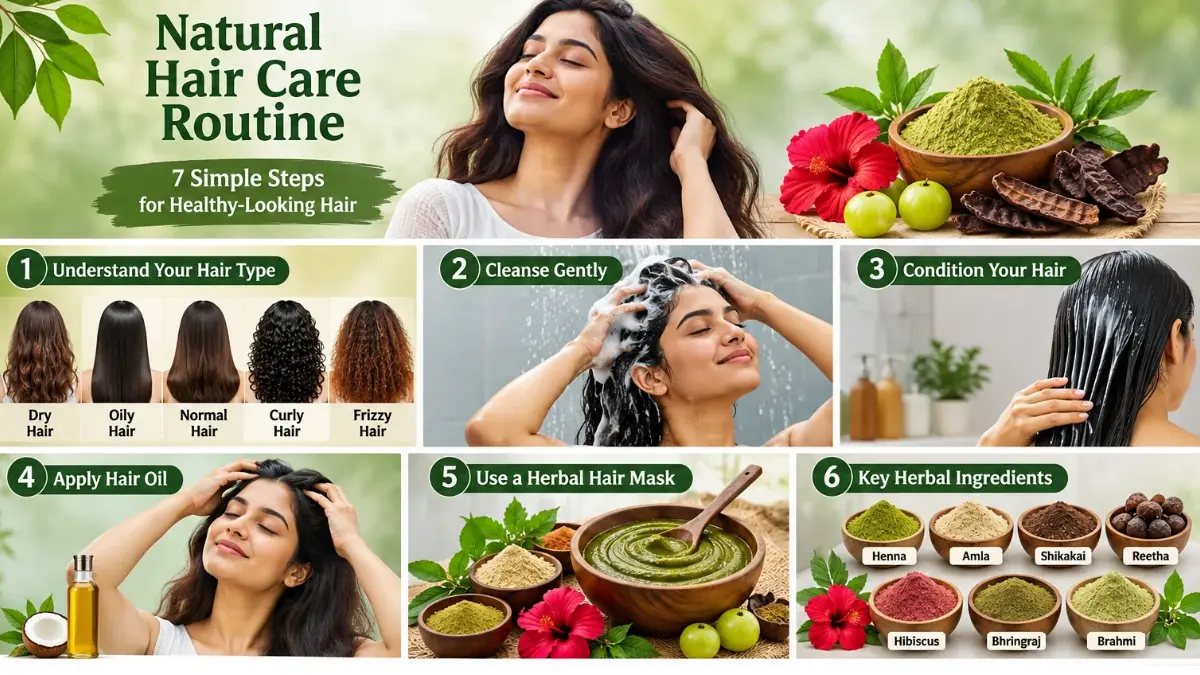
A consistent natural hair care routine can help keep your hair clean, manageable, moisturised and healthy-looking without relying on an unnecessarily complicated collection of products.
Whether you have dry hair, oily roots, frizzy hair, curly hair or a normal hair type, the right routine starts with understanding your scalp, choosing suitable ingredients and following a few simple steps consistently.
Natural ingredients such as aloe vera, amla, shikakai, hibiscus, bhringraj and henna have long been used in traditional hair care practices. When selected appropriately, they can complement a balanced hair care routine.
In this guide, we explain 7 natural hair care routine steps, how often to follow them, which herbal ingredients you can consider and how to build a routine according to your hair type.
What Are the Essential Steps in a Natural Hair Care Routine?
A natural hair care routine generally includes cleansing, conditioning, moisturising, scalp care and protection against damage.
Here is a simple overview:
| Step | Hair Care Activity | Recommended Frequency |
|---|---|---|
| 1 | Understand your hair and scalp type | Before choosing products |
| 2 | Cleanse with a gentle shampoo or herbal cleanser | According to scalp needs |
| 3 | Condition your hair | After shampooing |
| 4 | Apply a suitable hair oil | As needed |
| 5 | Use a herbal hair mask | Once every 1–2 weeks |
| 6 | Maintain scalp and hair hygiene | Regularly |
| 7 | Protect hair from damage | Daily |
Let’s understand each step in detail.
Step 1: Understand Your Hair and Scalp Type
Before starting a natural hair care routine, identify your hair and scalp type. A product that works well for someone with dry hair may not be suitable for someone with an oily scalp.
Consider these common hair types:
| Hair Type | Common Characteristics | Care Approach |
|---|---|---|
| Dry hair | Rough texture, dryness and frizz | Focus on conditioning and moisture |
| Oily scalp | Roots become greasy quickly | Use appropriate cleansing frequency |
| Normal hair | Generally balanced scalp and hair | Maintain a consistent routine |
| Curly hair | More prone to dryness and tangling | Use conditioning products and gentle detangling |
| Frizzy hair | Flyaways and uneven texture | Reduce friction and improve conditioning |
| Chemically treated hair | May be more fragile or dry | Choose gentle products and avoid excessive treatments |
Tip: Your scalp and hair lengths may have different needs. For example, you can have an oily scalp and dry hair ends.
Step 2: Cleanse Your Hair Gently
Cleansing removes excess oil, sweat, dust and product buildup from your scalp and hair.
Choose a shampoo suitable for your scalp type. Avoid using very hot water and aggressive scrubbing.
Traditional herbal ingredients that are commonly used in hair cleansing include:
- Shikakai: Traditionally used as a plant-based hair cleanser.
- Reetha: Contains natural saponins and is traditionally used for cleansing.
- Amla: Commonly included in traditional herbal hair care preparations.
- Aloe vera: Used in some hair care formulations for its conditioning properties.
You can explore herbal cleansing formulations containing these ingredients, provided they are suitable for your scalp and hair.
How often should you wash your hair?
There is no universal washing schedule. People with oily scalps may need more frequent washing, while those with dry or curly hair may prefer less frequent cleansing. Adjust according to your scalp condition and product buildup.
Step 3: Condition Your Hair After Washing
Conditioning is an important part of a natural hair care routine because it helps improve softness, manageability and detangling.
After shampooing:
- Remove excess water gently.
- Apply conditioner mainly to the mid-lengths and ends.
- Leave it on according to the product instructions.
- Rinse thoroughly.
Herbal ingredients such as hibiscus, aloe vera and amla are commonly incorporated into hair conditioning products.
Remember that a herbal ingredient does not automatically replace a properly formulated conditioner. Choose a product that provides the conditioning your hair needs.
Step 4: Apply Hair Oil According to Your Hair Needs
Oiling is a traditional part of many Indian hair care routines.
Different oils can serve different purposes, including reducing friction, improving hair manageability and helping protect the hair shaft.
Common choices include:
| Oil | Traditional Hair Care Use |
|---|---|
| Coconut oil | Helps reduce protein loss from hair when used appropriately |
| Almond oil | Used as a conditioning hair oil |
| Sesame oil | Traditionally used in scalp and hair massage |
| Rosemary essential oil | Used in diluted formulations for scalp care |
| Amla-infused oil | Traditionally used in Indian hair care practices |
How to oil your hair:
- Select an oil suitable for your hair and scalp.
- Apply a small quantity to the hair or scalp as appropriate.
- Massage gently without scratching.
- Leave it for a suitable period.
- Wash it out if needed.
Avoid applying undiluted essential oils directly to your scalp. Essential oils should be diluted appropriately in a suitable carrier oil, and a patch test is advisable.
You do not need to oil your hair every day. Adjust the frequency according to your hair’s needs.
Step 5: Use a Herbal Hair Mask
A herbal hair mask can be an additional step in your hair care routine.
Traditional Indian hair care uses several plant-based powders and ingredients.
| Herbal Ingredient | Traditional Hair Care Application |
|---|---|
| Amla powder | Used in herbal hair masks |
| Hibiscus powder | Used in conditioning hair preparations |
| Bhringraj powder | Traditionally used in Ayurvedic hair care |
| Fenugreek powder | Used in hair masks and conditioning preparations |
| Aloe vera | Used in moisturising hair care formulations |
| Henna powder | Used for natural hair colouring and conditioning preparations |
How to Prepare a Simple Herbal Hair Mask
You can prepare a basic hair mask using suitable herbal powders.
Ingredients:
- 2 tablespoons hibiscus powder
- 1 tablespoon amla powder
- Water as required
Preparation:
- Mix the herbal powders in a clean bowl.
- Add water gradually to make a smooth paste.
- Allow the mixture to hydrate.
- Apply according to the product’s intended use.
- Rinse thoroughly.
Adjust the quantities according to your hair length and the instructions for the ingredients you purchase.
Important: Always check the ingredient label and perform a patch test before applying a new herbal preparation. Avoid applying a mixture if you experience irritation.
Should You Include Henna in Your Hair Care Routine?
Henna is a traditional plant-based ingredient obtained from the leaves of Lawsonia inermis.
It is particularly known for its natural colouring properties. Henna deposits colour onto the hair, typically producing orange, copper or reddish tones depending on the original hair colour and application.
Henna can be included in a routine when natural colouring is desired. However, it is not necessary for everyone.
If you want to use henna:
- Choose pure henna powder with a clearly disclosed ingredient list.
- Check that the product does not contain undisclosed synthetic dyes.
- Perform a strand test before full application.
- Remember that henna can create lasting colour changes.
Step 6: Maintain Scalp Hygiene
Healthy-looking hair care starts with a clean and comfortable scalp.
Follow these simple practices:
- Wash your scalp according to its oiliness and buildup.
- Clean your combs and hairbrushes regularly.
- Avoid sharing personal hair care tools.
- Do not scratch or aggressively massage your scalp.
- Avoid excessive use of styling products.
- Change pillowcases regularly.
If you experience persistent itching, flaking, redness or unusual hair loss, consider consulting a dermatologist rather than relying solely on herbal treatments.
Step 7: Protect Your Hair from Everyday Damage
Your daily habits can influence how your hair looks and feels.
Include these practices in your routine:
Avoid excessive heat: Reduce frequent use of straighteners, curling irons and high-temperature blow dryers.
Detangle gently: Use a wide-tooth comb, especially when your hair is wet and more vulnerable to breakage.
Avoid tight hairstyles: Repeatedly pulling hair tightly can contribute to traction-related hair loss.
Protect your hair from environmental exposure: Cover your hair when exposed to dust, strong sunlight or other harsh environmental conditions.
Maintain a balanced diet: Include adequate protein, vitamins, minerals and healthy fats as part of a balanced diet.
Natural Hair Care Routine According to Hair Type
Your routine should be adjusted according to your hair’s individual needs.
| Hair Type | Recommended Routine |
|---|---|
| Dry hair | Gentle cleansing, regular conditioning and suitable hair oil |
| Oily hair | Appropriate cleansing frequency and lightweight conditioning |
| Frizzy hair | Conditioning, gentle detangling and reduced heat styling |
| Curly hair | Moisturising products, careful detangling and protective hairstyles |
| Normal hair | Regular cleansing, conditioning and occasional hair masks |
| Chemically treated hair | Gentle cleansing, conditioning and reduced heat exposure |
Weekly Natural Hair Care Routine
Here is a simple example of a weekly routine you can adapt.
| Day | Hair Care Activity |
|---|---|
| Monday | Gentle cleansing and conditioning |
| Tuesday | Gentle detangling and daily hair protection |
| Wednesday | Hair oiling if needed |
| Thursday | Regular hair maintenance |
| Friday | Gentle cleansing if required |
| Saturday | Herbal hair mask, if suitable |
| Sunday | Rest day and scalp observation |
This is only an example. You do not need to wash, oil or apply a hair mask on fixed days. Your scalp condition, hair type and lifestyle should determine the schedule.
Which Natural Ingredients Should You Look for in Hair Care Products?
India has a long tradition of using botanical ingredients in hair care. Some popular ingredients include:
Amla (Indian Gooseberry): Commonly used in traditional herbal hair care formulations.
Shikakai: A traditional plant-based cleansing ingredient.
Reetha (Soapnut): Contains saponins and is used in traditional cleansing preparations.
Hibiscus: Commonly incorporated into herbal hair masks and conditioning products.
Bhringraj: An ingredient associated with traditional Ayurvedic hair care.
Brahmi: Traditionally included in herbal hair and scalp preparations.
Henna: A plant-based ingredient primarily known for natural hair colouring.
Choose products with transparent ingredient lists, appropriate quality documentation and clear instructions for use.
Why Choose Herbal Hair Care Products from Narti Herbs?
Narti Herbs is an Indian herbal products brand associated with Sojat, Rajasthan, a region known for its henna production.
For people exploring traditional Indian herbal hair care ingredients, Narti Herbs offers products such as:
- Natural henna powder
- Amla powder
- Shikakai powder
- Reetha powder
- Hibiscus powder
- Bhringraj powder
- Brahmi powder
- Indigo powder
When selecting herbal powders, check the ingredient composition, manufacturing information, batch details and suitability for your intended application.
Explore the available herbal products at Narti Herbs: https://nartiherbs.com/
Frequently Asked Questions About Natural Hair Care Routine Steps
1. What are the basic steps in a natural hair care routine?
The basic steps include understanding your hair type, cleansing your scalp, conditioning your hair, applying suitable hair oil, using an occasional hair mask, maintaining scalp hygiene and protecting your hair from everyday damage.
2. How can I start a natural hair care routine at home?
Start with a gentle shampoo and conditioner suitable for your hair type. Add suitable hair oil or a herbal hair mask if needed. Keep the routine simple and introduce one new product at a time.
3. Which natural ingredients are best for hair care?
Commonly used botanical ingredients include amla, shikakai, reetha, hibiscus, bhringraj, brahmi, aloe vera and henna. Their applications differ, so select ingredients according to your hair care goals.
4. Can I use amla and hibiscus powder together?
Amla and hibiscus powders are commonly combined in traditional herbal hair masks. Check the product instructions, use suitable quantities and perform a patch test before application.
5. How often should I apply a herbal hair mask?
For many people, once every one or two weeks is a reasonable starting point. Adjust the frequency depending on the formulation and how your hair responds.
6. Is henna necessary in a natural hair care routine?
No. Henna is optional. It is mainly used for natural hair colouring and is not a necessary step for maintaining a hair care routine.
7. Should I apply hair oil before or after washing?
It depends on your hair and the oil. Some people apply oil before washing to reduce friction and improve manageability. Others use a small quantity on hair lengths after washing. Avoid excessive application if your scalp is oily or prone to buildup.
8. Can natural hair care products cause allergies?
Yes. Natural and plant-derived ingredients can also cause allergic reactions or irritation. Review the ingredient list and perform a patch test before use.
9. How long does it take to see results from a natural hair care routine?
There is no fixed timeline. Improvements in softness, manageability and dryness may be noticed sooner, while changes in hair growth or density cannot be guaranteed by a routine or a particular herbal ingredient.
10. Can I use shikakai and reetha instead of shampoo?
Shikakai and reetha are traditionally used as plant-based cleansing ingredients. However, their cleansing performance and suitability vary by preparation and individual scalp type. A properly formulated shampoo may be more convenient and predictable.
Final Thoughts
A good natural hair care routine does not need to be complicated. Start by understanding your scalp and hair type, cleanse gently, condition regularly, use suitable herbal ingredients and protect your hair from unnecessary damage.
Ingredients such as amla, shikakai, reetha, hibiscus, bhringraj and henna can be part of traditional herbal hair care practices, but choosing the right formulation and using it appropriately is important.
Consistency, suitable products and healthy daily habits are the foundation of a practical hair care routine.