


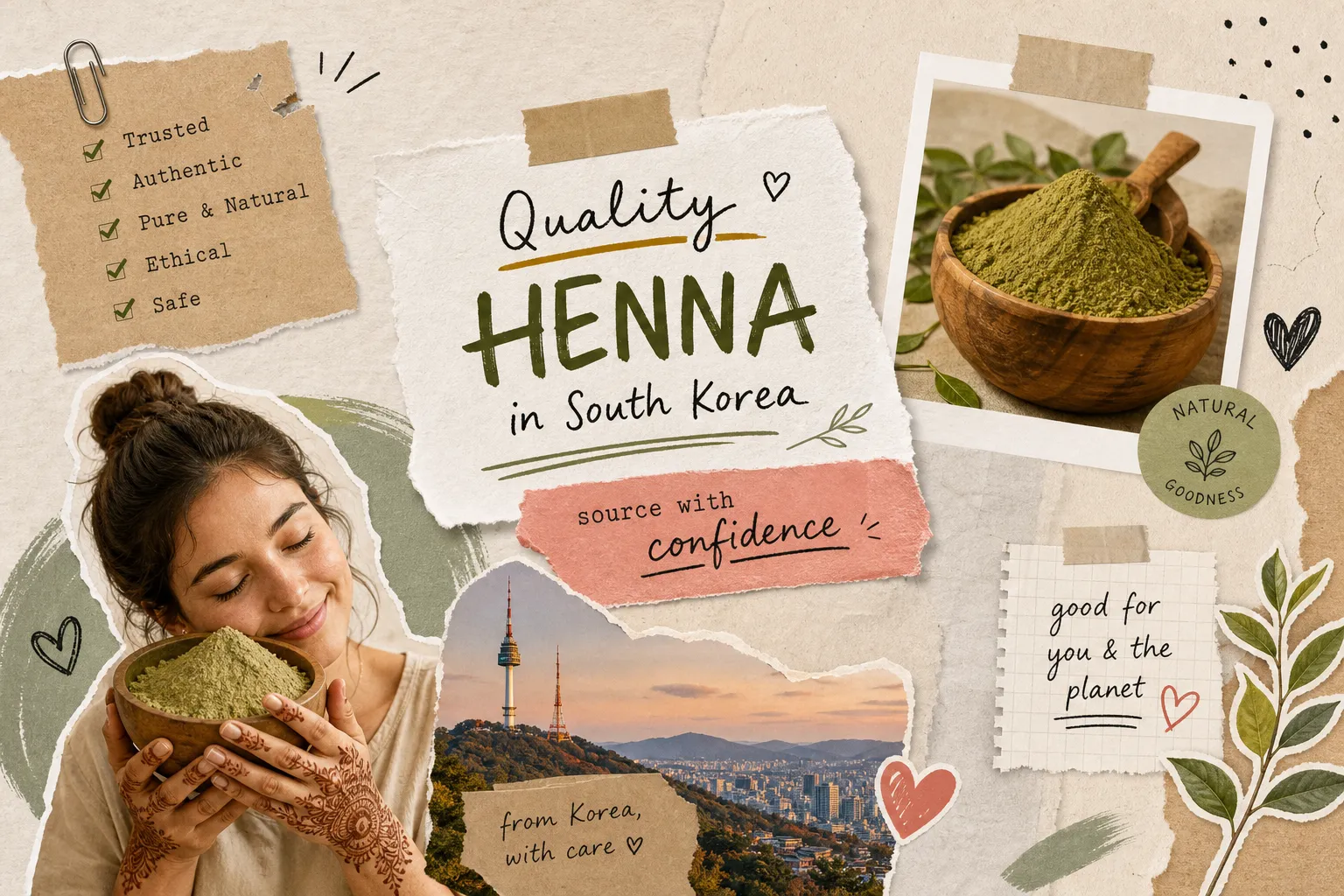
5 Trusted Ways to Source Quality Henna Powder in South Korea
Narti Herbs is a certified henna powder manufacturer based in Sojat, Rajasthan, India, supplying natural Sojat henna powder to international buyers, wholesalers, cosmetic brands, and professional henna businesses. As a leading henna powder manufacturer, it has been dedicated to producing high-quality henna since 2012, ensuring excellent product quality and customer satisfaction. Manufacturing since 2012, Narti Herbs combines regional henna sourcing expertise with established manufacturing practices, quality documentation, and bulk supply capabilities for businesses looking to source authentic Indian henna powder. This dedication makes Narti Herbs a reliable henna powder manufacturer for diverse clients.
For South Korean cosmetic brands, salon owners, professional henna artists, wholesalers, and importers, finding a reliable natural henna supplier requires more than comparing prices. Buyers need to evaluate geographical origin, lawsone content, product purity, manufacturing standards, certifications, batch documentation, and export capabilities.
Narti Herbs offers Sojat henna powder associated with the Geographical Indication (GI) of Sojat, Rajasthan, with a listed lawsone specification of 2.8%. Buyers can contact the manufacturer to discuss current batch availability, applicable laboratory reports, product specifications, and wholesale requirements.
South Korean businesses sourcing natural henna often depend on international suppliers, making supplier verification an important part of the purchasing process.
In this guide, we explore five practical ways to source quality henna powder in South Korea, how to evaluate Indian manufacturers remotely, what quality documents to request, and why sourcing directly from an established manufacturer such as Narti Herbs can be an attractive option.
When sourcing henna, it’s crucial to partner with a trustworthy henna powder manufacturer like Narti Herbs. This ensures you receive the highest quality products with consistent lawsone content.
Key Takeaways
- Direct manufacturer sourcing: Narti Herbs manufactures natural Sojat henna powder in Rajasthan, India.
- GI-recognised origin: Sojat is recognised for its traditional henna production and geographical origin.
- Lawsone specification: Narti Herbs lists a 2.8% lawsone specification for its Sojat henna powder.
- Manufacturing credentials: Buyers can request applicable ISO, GMP, and organic certification documents.
- Virtual factory inspection: International buyers can request five scheduled video meetings to evaluate the manufacturing facility, sourcing, processing, quality documentation, and export readiness.
- Bulk purchasing: Buyers should confirm minimum order quantities, packaging formats, sample availability, and shipping arrangements.
- Import compliance: South Korean importers should confirm applicable MFDS, customs, labelling, and phytosanitary requirements before shipment.
1. Source Directly from Narti Herbs, a Certified Sojat Henna Powder Manufacturer in India
For South Korean businesses looking for natural henna powder, sourcing directly from an established Indian manufacturer can simplify supplier communication and product verification.
Narti Herbs operates from Sojat City, Rajasthan, India, a region recognised for its traditional henna production. The business has been involved in henna manufacturing since 2012 and supplies herbal products to domestic and international markets.
Unlike purchasing through multiple intermediaries, direct manufacturer sourcing gives buyers an opportunity to discuss product specifications, packaging requirements, quality documentation, and commercial terms directly with the manufacturing business.
Why consider Narti Herbs for henna powder sourcing?
Manufacturing experience since 2012
Narti Herbs brings more than a decade of experience in henna and herbal product manufacturing. This experience helps international buyers communicate directly with a manufacturer familiar with Sojat henna sourcing and supply requirements.
Choosing the right henna powder manufacturer can impact your business’s reputation. Narti Herbs offers a transparent sourcing process, ensuring buyers understand the quality of the henna they purchase.
Sojat GI-recognised origin
As a leading henna powder manufacturer, Narti Herbs ensures the highest quality standards in its products, reinforcing its commitment to excellence in the herbal industry.
Sojat henna is recognised through a Geographical Indication (GI) registration associated with its regional origin.
For buyers interested in authentic Indian henna, geographical origin is an important consideration. Buyers should request applicable supporting documentation when verifying the origin of a specific shipment.
Lawsone specification
Lawsone is the naturally occurring colouring compound found in henna leaves. Its concentration is an important consideration for buyers evaluating henna powder for different applications.
Narti Herbs lists a lawsone specification of 2.8% for its Sojat henna powder. International buyers can request the applicable batch-specific Certificate of Analysis (COA) to assess the actual laboratory results.
Manufacturing and quality credentials
Narti Herbs has manufacturing credentials including ISO, GMP, and organic certifications. Buyers should request the relevant current certificates and verify their scope, validity, product coverage, and certification body.
Herbal product range
In addition to henna powder, Narti Herbs offers herbal powders including:
- Amla powder
- Indigo powder
- Reetha powder
- Shikakai powder
- Hibiscus powder
- Bhringraj powder
- Brahmi powder
- Cassia obovata powder
This product range can be relevant to cosmetic brands, herbal product distributors, and businesses developing natural hair-care formulations.
Who can source from Narti Herbs?
Narti Herbs can discuss sourcing requirements with:
As a dedicated henna powder manufacturer, Narti Herbs understands the complexities of international trade, making it easier for businesses to navigate sourcing challenges.
- South Korean cosmetic manufacturers.
- Natural hair-care brands.
- Professional henna suppliers.
- Wholesale herbal ingredient distributors.
- Private-label businesses.
- International importers.
- Beauty and personal-care product manufacturers.
Businesses interested in sourcing Sojat henna powder directly from India can contact Narti Herbs to discuss product specifications, samples, packaging, and export requirements.
When sourcing henna, selecting a reputable henna powder manufacturer is essential for ensuring high standards are met throughout the supply chain.
Looking for a direct Indian henna manufacturer?
Contact Narti Herbs to discuss bulk Sojat henna powder sourcing and request available product documentation.
Website: https://nartiherbs.com/
2. Explore B2B Wholesale Platforms to Find International Henna Suppliers
International B2B marketplaces are another way to discover henna powder suppliers serving South Korean buyers.
Platforms such as Alibaba, ExportHub, and Kompass connect international buyers with manufacturers, exporters, distributors, and wholesalers.
These platforms can be useful when comparing suppliers, identifying available product grades, and requesting quotations.
However, marketplace verification alone does not establish that a supplier is a genuine manufacturer or that its product meets your specifications.
What should buyers check on B2B platforms?
Before contacting a supplier, review:
- Whether the company identifies itself as a manufacturer or trader.
- Its manufacturing or business address.
- Product ingredient declarations.
- Available quality and organic certifications.
- Product specifications and mesh size.
- Minimum order quantity (MOQ).
- Packaging options.
- Sample availability.
- Export experience and destination markets.
Request a formal quotation rather than relying exclusively on marketplace-listed prices.
What should a henna powder RFQ include?
| Requirement | Information to provide |
|---|---|
| Product | Natural Lawsonia inermis henna powder |
| Origin | Sojat, Rajasthan, India, if required |
| Product specification | Desired lawsone content and mesh size |
| Quantity | Required quantity in kilograms |
| Packaging | Bulk bags or customised packaging |
| Documentation | Applicable COA and certifications |
| Destination | South Korea |
| Shipping terms | Preferred Incoterm |
For buyers who require consistent product specifications and direct manufacturer communication, contacting Narti Herbs is another option worth considering alongside B2B marketplaces.
3. Can Etsy and Cross-Border Retail Channels Work for Smaller Henna Orders?
For buyers who want to evaluate small quantities before establishing a wholesale relationship, cross-border retail platforms such as Etsy can be useful.
These platforms provide access to individual sellers, artisan suppliers, and small businesses offering natural henna products.
They may be particularly useful for:
- Individual henna artists.
- Small beauty businesses.
- Buyers evaluating product texture and application.
- Small-scale product testing.
- Businesses conducting preliminary market research.
However, retail purchases are not always suitable for commercial manufacturing or large-volume distribution.
What should buyers check before ordering?
When purchasing henna powder through an online retail marketplace, examine:
- The complete ingredient declaration.
- The stated botanical identity, Lawsonia inermis.
- The product’s country and regional origin.
- Available batch and quality documentation.
- Seller identity and business details.
- Packaging condition and product shelf life.
Do not assume that a seller’s organic or chemical-free claims are verified simply because they appear in a product description.
For businesses planning recurring wholesale orders, it is generally more practical to establish direct communication with a manufacturer that can discuss product specifications and commercial supply arrangements.
4. Attend Korean Beauty and Cosmetics Trade Fairs to Identify Ingredient Suppliers
South Korea has an established cosmetics and beauty industry, with trade events that connect manufacturers, ingredient suppliers, distributors, and international businesses.
Trade fairs can provide opportunities to meet suppliers, understand market requirements, and explore potential business relationships.
Some events worth researching include:
- COSMOBEAUTY Seoul
- InterCHARM Korea
- K-Beauty Expo Korea
- in-cosmetics Korea
- CI KOREA
Check each event’s current calendar, exhibitor list, and participation requirements before making travel arrangements.
What should henna buyers discuss at trade fairs?
If you are sourcing henna powder for a Korean cosmetics or hair-care business, prepare a product specification sheet before attending.
Include:
- Botanical name: Lawsonia inermis.
- Country and region of origin.
- Desired lawsone specification.
- Required powder mesh size.
- Packaging requirements.
- Organic certification requirements, if applicable.
- Batch-specific quality documentation.
- Intended product application.
- Expected purchasing quantity.
Ask prospective suppliers for product samples, applicable COAs, ingredient declarations, certification documents, and manufacturing details.
Trade fairs are useful for meeting potential distributors and cosmetic formulators. However, they should be treated as a supplier-discovery channel rather than proof of supplier credibility.
5. Choose a Certified Indian Henna Manufacturer for Direct International Sourcing
India is an important source of natural henna, and Rajasthan is particularly associated with the cultivation and processing of henna.
Within Rajasthan, Sojat is widely recognised for its traditional henna industry.
For South Korean businesses seeking authentic Indian henna powder, sourcing from the Sojat region offers an opportunity to purchase directly from businesses familiar with the regional product and its supply chain.
Why is Sojat henna important for international buyers?
Sojat henna is associated with the Geographical Indication (GI) registration for the region.
This recognition is relevant to buyers who want to establish the geographical origin of their henna supply.
However, geographical origin alone does not establish the laboratory quality of every batch. Buyers should also evaluate product specifications and request appropriate quality documentation.
Understanding lawsone content in henna powder
Lawsone is the natural colouring molecule found in henna leaves.
Its concentration is an important quality consideration, particularly for professional body-art applications and natural hair-colouring products.
When evaluating henna powder, buyers should consider:
- The reported lawsone percentage.
- The analytical method used.
- The laboratory conducting the analysis.
- The batch number associated with the test report.
- The date of testing.
- Whether the result applies to the actual shipment being purchased.
Narti Herbs lists a 2.8% lawsone specification for its Sojat henna powder. Buyers can request the relevant batch-specific COA to evaluate the available product against their own purchasing specifications.
Why consider direct sourcing from Narti Herbs?
Narti Herbs provides an opportunity for South Korean businesses to establish direct communication with an Indian henna manufacturer.
Its manufacturing background, Sojat product origin, and available manufacturing credentials make it a potential sourcing partner for businesses looking to establish a supply relationship.
Rather than relying only on marketplace descriptions, buyers can contact Narti Herbs to discuss:
- Product specifications.
- Available henna grades.
- Sample requirements.
- Applicable certification documents.
- Bulk packaging.
- Wholesale quantities.
- Export quotations.
For importers and cosmetic businesses seeking natural henna powder from India, direct manufacturer communication can help establish clearer expectations before placing a commercial order.
6. How to Verify an Indian Henna Manufacturer Online Without Travelling to India
International buyers often want to inspect a manufacturer’s production facility before placing a bulk order. However, travelling from South Korea to India for an initial supplier evaluation can involve significant expenses, including international flights, accommodation, local transportation, and time away from business operations.
Narti Herbs recommends a structured five-step virtual factory verification process for international buyers who want to evaluate a potential manufacturing partner remotely.
With manufacturing experience dating back to 2012, Narti Herbs understands the importance of transparency when establishing relationships with international wholesalers, cosmetic brands, distributors, and importers.
Instead of immediately arranging an international factory visit, prospective buyers can request five scheduled live video meetings with the manufacturer. Each meeting focuses on a different aspect of the business, from manufacturing facilities and raw material sourcing to quality control, packaging, and export readiness.
This approach allows buyers to ask questions, observe relevant operations, review available documentation, and assess whether the manufacturer meets their purchasing requirements before considering international travel.
Five Video Calls to Verify a Henna Powder Manufacturer in India
To maximize the benefits of sourcing from a henna powder manufacturer, consider establishing clear communication regarding product specifications and quality expectations.
The following table outlines a practical five-meeting supplier evaluation process for South Korean buyers interested in sourcing natural henna powder from India.
| Video meeting | What buyers should inspect | Key questions to ask |
|---|---|---|
| 1. Manufacturing facility tour | Factory premises, machinery, equipment and manufacturing setup | Where is the manufacturing facility located? What products are manufactured here? |
| 2. Raw material sourcing | Henna leaves, geographical origin, raw material selection and storage | Is the henna sourced from Sojat, Rajasthan? How is raw material quality evaluated? |
| 3. Processing and manufacturing | Relevant powder processing stages, machinery and production environment | What are the main processing stages? How is product consistency maintained? |
| 4. Quality control and certifications | Testing documentation, batch records, certificates and quality procedures | Can you provide a batch-specific COA? Which certifications apply to the manufacturing facility and product? |
| 5. Packaging and export readiness | Packaging materials, storage, labelling and shipment preparation | What packaging formats are available? Can you arrange export shipments to South Korea? |
Video Call 1: Inspect the Henna Manufacturing Facility
The first meeting should focus on understanding the manufacturer’s actual business premises and manufacturing infrastructure.
Buyers can request a live video walkthrough of the facility in Sojat, Rajasthan, to understand the general manufacturing setup, available machinery, storage arrangements, and product range.
Questions to discuss:
- Where is the manufacturing unit located?
- Is the facility involved in actual manufacturing or only trading?
- What herbal products are manufactured?
- What machinery and processing equipment are available?
- How are raw materials and finished products stored?
For international buyers, this initial meeting provides an opportunity to establish direct communication with the manufacturing business.
Video Call 2: Understand Raw Material Sourcing and Henna Origin
The second meeting should focus on the origin and selection of raw materials.
Sojat, Rajasthan, is recognised for its traditional henna industry and GI-associated regional identity. Buyers interested in authentic Sojat henna should understand how the manufacturer sources and evaluates the raw material.
During this meeting, buyers can discuss:
- Origin of the henna leaves.
- Raw material sourcing arrangements.
- Raw material selection criteria.
- Storage and handling practices.
- Applicable geographical origin documentation.
- Product specifications and available testing records.
For businesses importing natural henna powder into South Korea, understanding the raw material’s origin is an important part of supplier evaluation.
Video Call 3: Observe the Henna Powder Manufacturing Process
The third meeting should focus on the actual manufacturing and processing operations.
Buyers can request a live demonstration of relevant manufacturing stages to understand how raw materials are processed into finished henna powder.
Depending on the manufacturer’s operations, the discussion may cover:
- Raw material preparation.
- Processing machinery.
- Powder processing operations.
- Product handling.
- Production environment.
- Finished-product consistency.
This meeting helps buyers understand the manufacturer’s manufacturing capabilities rather than relying entirely on product photographs, brochures, or marketplace descriptions.
Video Call 4: Review Quality Control, Laboratory Reports and Certifications
Product quality documentation is particularly important when importing botanical ingredients for cosmetic and personal-care applications.
During the fourth meeting, buyers should request to review the manufacturer’s applicable quality documentation.
For natural henna powder, relevant documents and specifications may include:
- Certificate of Analysis (COA).
- Lawsone content test results.
- Heavy-metal testing reports.
- Microbiological test reports.
- Applicable ISO certification.
- GMP documentation.
- Organic certification.
- Product specifications and batch identification.
Narti Herbs has manufacturing credentials including ISO, GMP, and organic certifications. Buyers should request the applicable certificates to verify their scope, validity, and product coverage.
Narti Herbs lists a 2.8% lawsone specification for its Sojat henna powder. International buyers can request the applicable batch-specific laboratory documentation to verify the actual results.
Video Call 5: Inspect Packaging, Storage and Export Readiness
The fifth meeting should focus on commercial supply arrangements and the preparation of products for international shipment.
South Korean buyers can discuss their required packaging formats, order quantities, labelling specifications, and export documentation.
Topics to cover include:
- Bulk packaging options.
- Moisture-protective packaging requirements.
- Available product quantities.
- Storage and handling.
- Product labelling requirements.
- Commercial invoice and packing list.
- Certificate of Origin, where applicable.
- Shipping arrangements and Incoterms.
- South Korean import requirements.
This final meeting helps both parties understand the practical requirements for establishing a commercial supply relationship.
Benefits of Virtual Factory Inspection for South Korean Buyers
A structured virtual factory inspection can help international buyers evaluate a potential supplier before spending money on international travel.
| Evaluation factor | Benefit of video verification |
|---|---|
| Travel expenses | Avoid unnecessary initial international travel |
| Manufacturing transparency | Observe relevant factory operations through live video |
| Supplier verification | Communicate directly with the manufacturing business |
| Product quality | Discuss specifications and review available laboratory reports |
| Certifications | Request and examine applicable certification documents |
| Packaging | Understand available bulk packaging options |
| Export planning | Discuss shipping, documentation and destination requirements |
| Business relationship | Establish direct communication before placing an order |
Virtual factory inspections do not replace independent audits, physical inspections, or laboratory testing. However, they can help buyers make a more informed decision about whether an in-person visit is necessary.
Why Choose Narti Herbs for a Virtual Manufacturer Evaluation?
Narti Herbs is a henna and herbal product manufacturer based in Sojat City, Rajasthan, India, with manufacturing experience dating back to 2012.
For international buyers interested in natural Sojat henna powder, the company provides an opportunity to discuss manufacturing operations, product specifications, applicable quality documents, and export requirements directly with the manufacturer.
South Korean importers, cosmetic brands, wholesalers, and distributors can request information about arranging a structured five-meeting virtual supplier evaluation.
Rather than travelling to India immediately, buyers can first understand the manufacturer’s operations through scheduled video meetings and decide whether a physical factory inspection is necessary for their business.
Looking for a Henna Powder Manufacturer in India?
Contact Narti Herbs to discuss your bulk henna powder requirements and arrange a virtual manufacturing discussion.
Website: https://nartiherbs.com/
Share your product requirements, estimated order quantity, preferred packaging, and destination country when making your enquiry.
Narti Herbs can then discuss available products, applicable documentation, and potential supply arrangements.
7. How to Verify Henna Powder Quality Before Placing a Bulk Order
Make informed decisions by thoroughly evaluating potential henna powder manufacturer partners through documentation and quality assurance processes.
Whether you source through a local distributor, online marketplace, or direct Indian manufacturer, product verification should be an essential part of your purchasing process.
A professional buyer should request appropriate documentation before committing to a large order.
1. Request a batch-specific Certificate of Analysis
A Certificate of Analysis (COA) provides information about the tested product batch.
Depending on the product’s intended use and buyer requirements, relevant parameters may include:
- Lawsone content.
- Heavy metals.
- Microbiological parameters.
- Pesticide residues.
- Moisture content.
- Other agreed product specifications.
The applicable testing requirements should be agreed upon between the buyer and supplier.
2. Verify organic certification
If your purchasing requirement specifies organic henna, request the relevant certificate.
Check:
- The certification body.
- Certificate validity.
- Certified operator or manufacturing entity.
- Product coverage.
- Scope of certification.
- Applicable processing and handling requirements.
A general organic claim should not be treated as equivalent to a verified product-specific organic certification.
3. Check the ingredient declaration
For a product marketed as pure natural henna powder, verify that the botanical ingredient is Lawsonia inermis.
If you are sourcing a blended or formulated product, request the complete ingredient declaration.
4. Evaluate product consistency
Request a representative sample before placing a large commercial order.
Examine the product’s:
- Colour and appearance.
- Texture and fineness.
- Aroma.
- Packaging condition.
- Performance for its intended application.
Where necessary, commission independent testing to compare the sample with the supplier’s stated specifications.
5. Confirm export documentation
Before arranging international transportation, coordinate with your supplier and Korean customs broker regarding the applicable documentation.
Depending on the product classification and import requirements, documentation may include:
- Commercial invoice.
- Packing list.
- Bill of lading or airway bill.
- Certificate of Origin, where required.
- Applicable phytosanitary documentation.
- Product specifications and laboratory reports.
- Other regulatory documents required for the intended product category.
8. South Korean Import Considerations for Natural Henna Powder
South Korean importers should evaluate the regulatory requirements applicable to their specific product and intended use.
Raw henna powder, cosmetic ingredients, prepared henna products, and finished cosmetic products may be subject to different requirements.
MFDS requirements
If the imported product is intended to be marketed as a cosmetic, the importer should confirm applicable Ministry of Food and Drug Safety (MFDS) requirements.
These may involve:
Finding a reliable henna powder manufacturer is crucial for establishing long-term business relationships and ensuring consistent product quality.
- Responsible importer obligations.
- Cosmetic ingredient compliance.
- Product safety requirements.
- Korean-language labelling.
- Applicable import and distribution procedures.
Do not assume that importing raw botanical powder and importing a finished cosmetic product follow identical procedures.
Customs classification and import taxes
The appropriate HS classification depends on the actual product, its processing, and its intended presentation.
Importers should confirm the applicable classification and tariff treatment with a licensed Korean customs broker before shipment.
South Korea’s general VAT rate is 10%, but the actual import tax calculation and applicable customs treatment should be confirmed for the specific shipment.
Phytosanitary requirements
Plant-derived materials may be subject to plant quarantine requirements depending on their processing, form, and import classification.
South Korean importers should check the relevant requirements with the competent authorities before shipment.
9. Checklist Before Placing Your First Bulk Henna Order
Use this checklist when evaluating an international henna supplier.
- Confirm the supplier’s legal business identity.
- Verify the actual manufacturing or sourcing location.
- Request applicable manufacturing and organic certificates.
- Verify the geographical origin of the henna.
- Request a batch-specific COA.
- Confirm the lawsone specification and analytical method.
- Request relevant heavy-metal and microbiological test reports.
- Confirm the complete ingredient declaration.
- Agree on packaging specifications.
- Confirm minimum order quantities.
- Request a product sample where available.
- Confirm the commercial quotation and Incoterms.
- Check Korean import and labelling requirements.
- Confirm the applicable customs classification.
- Verify the supplier’s bank account details before making payment.
10. Why South Korean Buyers Can Consider Narti Herbs for Henna Powder Sourcing
Finding the right henna supplier is about more than identifying the lowest price.
For cosmetic brands, professional henna businesses, wholesalers, and importers, the supplier’s manufacturing background, product origin, quality documentation, and ability to support commercial requirements all matter.
Narti Herbs offers direct access to a Sojat-based Indian henna manufacturer with manufacturing experience dating back to 2012.
Its natural Sojat henna powder, listed 2.8% lawsone specification, GI-associated regional origin, and manufacturing credentials provide international buyers with several factors to evaluate when considering a new supplier.
By communicating directly with Narti Herbs, South Korean businesses can discuss product specifications, available documentation, sample requirements, packaging options, and wholesale enquiries before entering into a supply arrangement.
The five-meeting virtual evaluation process also provides a practical way for prospective buyers to understand the manufacturer before deciding whether an in-person factory visit is necessary.
Whether you are launching a natural hair-care brand, expanding an existing cosmetic product range, or sourcing raw henna powder for professional use, establishing a reliable manufacturing relationship is an important step.
Looking for a Henna Powder Manufacturer in India?
Contact Narti Herbs to discuss your South Korean sourcing requirements.
Website: https://nartiherbs.com/
Submit your enquiry with the following information:
- Product required: Natural Sojat henna powder.
- Required quantity: Your estimated purchasing volume.
- Packaging preference: Bulk or customised packaging.
- Destination: South Korea.
- Intended application: Hair care, body art, or cosmetic manufacturing.
The Narti Herbs team can discuss available products, applicable documentation, and commercial supply requirements.
Frequently Asked Questions
1. Where can South Korean businesses buy natural henna powder from India?
South Korean businesses can source natural henna powder directly from Indian manufacturers and exporters, including Narti Herbs, based in Sojat, Rajasthan. Buyers can contact the manufacturer to discuss bulk requirements, samples, product specifications, and applicable quality documentation.
2. Is Narti Herbs a henna powder manufacturer or a trading company?
Narti Herbs is a henna and herbal product manufacturer based in Sojat City, Rajasthan, India. Its manufacturing experience dates back to 2012. International buyers can contact the company for information about its manufacturing credentials, product range, and supply capabilities.
3. What is the lawsone content of Narti Herbs Sojat henna powder?
Narti Herbs lists a lawsone specification of 2.8% for its Sojat henna powder. Buyers should request the applicable batch-specific Certificate of Analysis to verify the actual test results for the product they intend to purchase.
4. Does Narti Herbs offer bulk henna powder for wholesalers and importers?
Narti Herbs caters to herbal product and henna sourcing requirements. International wholesalers, distributors, and importers can contact the company to discuss available quantities, packaging formats, minimum order requirements, and commercial quotations.
5. Can South Korean cosmetic brands source henna powder directly from Narti Herbs?
South Korean cosmetic brands can contact Narti Herbs to discuss direct sourcing of natural Sojat henna powder from India. Product specifications, samples, packaging, documentation, and applicable export arrangements can be discussed with the manufacturer.
6. What documents should I request before purchasing henna powder in bulk?
Buyers should request a batch-specific Certificate of Analysis, ingredient declaration, applicable manufacturing and organic certificates, product specifications, and relevant export documentation. Additional testing may be required depending on the intended application and destination-market regulations.
7. Why is Sojat henna preferred by international buyers?
Sojat, Rajasthan, is recognised for its traditional henna industry and has a Geographical Indication associated with its henna. International buyers interested in Indian henna can evaluate its regional origin, product specifications, lawsone content, and supporting documentation when selecting a supplier.
8. How can I request a quotation from Narti Herbs?
Visit https://nartiherbs.com/ and contact Narti Herbs with your required product, estimated quantity, packaging preference, and destination country. This information helps the manufacturer understand your sourcing requirements and discuss an appropriate commercial quotation.
9. Can I inspect a henna powder manufacturing facility in India without travelling there?
Yes. International buyers can request scheduled live video meetings with an Indian henna manufacturer to discuss its manufacturing facility, machinery, raw material sourcing, processing operations, quality documentation, and packaging arrangements.
10. How many video calls should I have before selecting a henna manufacturer?
A structured evaluation involving five video meetings is a useful approach. The meetings can cover the manufacturing facility, raw material sourcing, processing operations, quality control, and packaging and export readiness.
11. Can Narti Herbs show its henna manufacturing process through video calls?
Prospective international buyers can contact Narti Herbs to discuss scheduled video meetings and the possibility of viewing relevant manufacturing operations remotely. The availability and scope of demonstrations should be confirmed in advance.
12. What documents should I request during a virtual factory inspection?
Depending on your purchasing requirements, request applicable ISO, GMP and organic certificates, product specifications, batch-specific COAs, lawsone test reports, and relevant quality documentation. Verify the validity and scope of each document.
13. Is a virtual factory inspection sufficient before placing a bulk order?
A virtual inspection is a useful initial supplier-evaluation method, but it does not replace independent laboratory testing, physical audits, or other verification required by your business. Buyers should evaluate samples and documentation before making a substantial commercial commitment.
A reputable henna powder manufacturer will also provide samples for testing, allowing buyers to assess quality before committing to a bulk order.
14. Can South Korean buyers purchase henna powder directly from Narti Herbs in India?
Partnering with a certified henna powder manufacturer guarantees compliance with international quality standards, providing confidence in product sourcing.
South Korean businesses can contact Narti Herbs to discuss direct sourcing of natural Sojat henna powder, available quantities, packaging options, applicable documentation, and export arrangements.
15. Does a virtual factory inspection eliminate the need for travelling to India?
It can eliminate the need for an initial visit in some cases, particularly when buyers only need preliminary supplier information. However, buyers may still choose to visit the manufacturing facility for independent verification, negotiations, or a long-term manufacturing partnership.
As a henna powder manufacturer, Narti Herbs emphasizes the importance of maintaining quality throughout the manufacturing process, ensuring customers receive the best possible products.
Understanding the benefits of sourcing from a dedicated henna powder manufacturer can help buyers make informed purchasing decisions, ensuring they choose the best products for their needs.
Ensure that your chosen henna powder manufacturer is transparent about their sourcing practices and adheres to global quality standards, fostering trust in the supply chain.
Ultimately, partnering with a trusted henna powder manufacturer can pave the way for successful sourcing and distribution strategies.
For buyers seeking natural henna powder, Narti Herbs stands out as a premier henna powder manufacturer with a commitment to quality.